Petrópolis from Rio: The Serra Climb, the Felt Slippers, and the Emperor’s Summer Capital
When Rio’s summer became unreasonable, the emperor moved the court up the mountain. The buses still make the same climb in ninety minutes, and the museum still makes you wear slippers over your shoes.
The short version
- Buses leave Rio’s Rodoviária Novo Rio for Petrópolis every half hour or so, climbing the forested serra switchbacks in about ninety minutes each way — turn up, buy the next departure, keep ID handy.
- Dom Pedro II built the summer capital in the 1840s to escape the lowland heat; the court, the diplomats, and the season followed, and the town still runs a few degrees cooler than the coast.
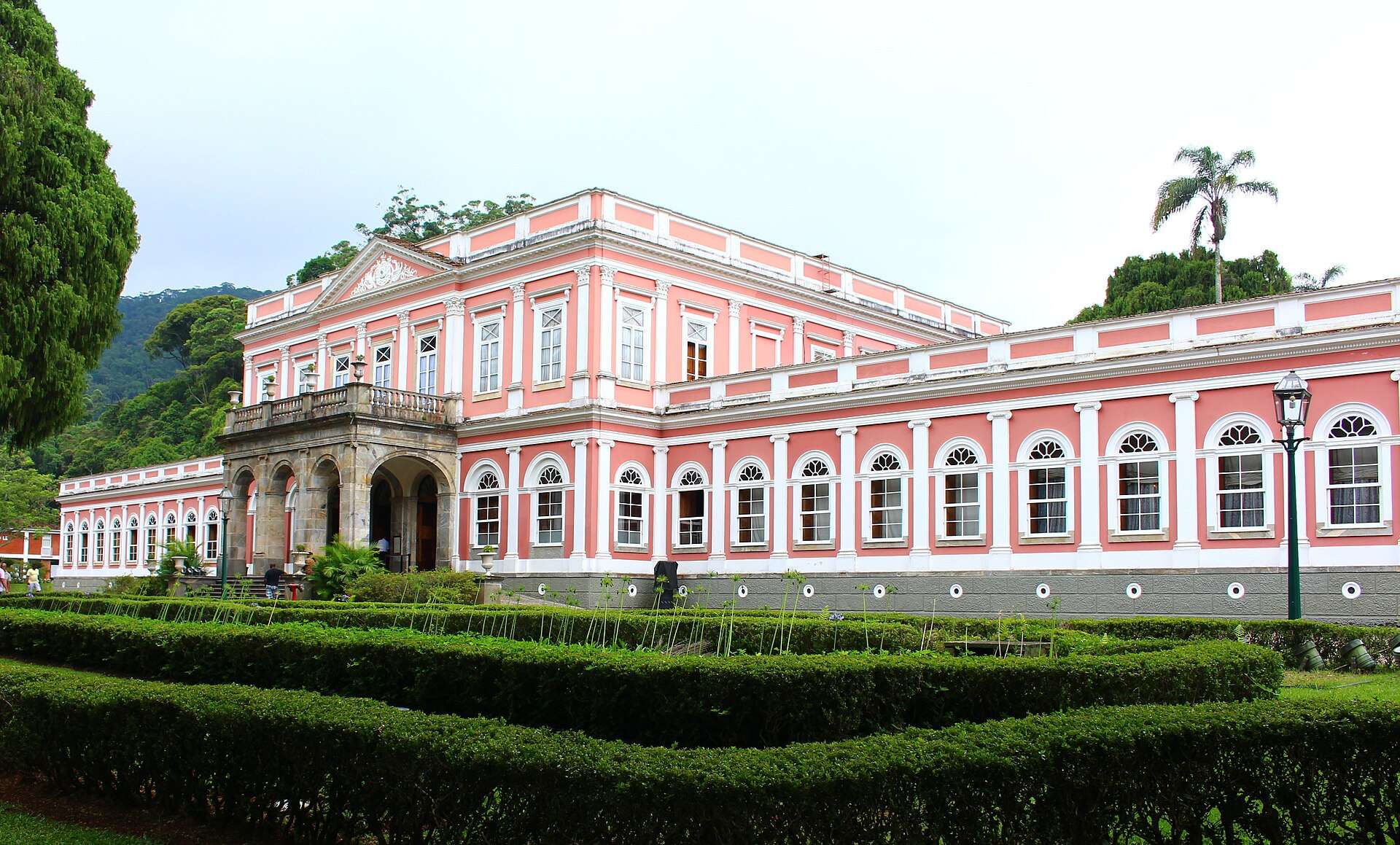
- The Imperial Museum — the summer palace itself — holds the crown jewels, the imperial crown’s 639 diamonds, and rooms kept as the family left them; the felt-slipper shuffle over the original floors is the visit’s signature ritual; details at museuimperial.museus.gov.br.
- The Crystal Palace — a French cast-iron and glass greenhouse gifted to a princess — anchors the canal-side stroll among the ministries-turned-mansions.
- The Cathedral of São Pedro de Alcântara holds the imperial tombs: Pedro II and the family, home from exile, in the town he built.
- Santos Dumont’s summer house — the aviation pioneer’s tiny, eccentric ‘Encantada,’ with its stairs built for one specific stride — adds the best small museum in town.

Getting there
The Novo Rio terminal’s Petrópolis bays run departures at metro-adjacent frequency; the ride climbs from the baixada into cloud-forest switchbacks — the left side going up hangs over the drops and the views, per the alarm. Petrópolis’s terminal sits a short local ride or a stretch of walk from the historic center; the return runs just as constantly into the evening. Drivers face the same serra with weekend traffic attached; the bus wins this one on every axis but schedule sovereignty.
The day
The Imperial Museum first, slippers on: the throne room, the crown under its case lights, the schoolbooks and telescopes of an emperor who preferred science to ceremony — ninety minutes passes quickly on those gliding floors. Then the canal axis: the Crystal Palace’s glass, the mansions of the imperial quarter, and the cathedral’s tombs closing the dynastic loop. Lunch runs German-Brazilian — the town’s settler heritage keeps bratwurst and chopp on the menus alongside feijoada. The afternoon takes Santos Dumont’s Encantada for its half-hour of charming strangeness, and the Quitandinha palace — a casino-resort folly of the 1940s — for those extending the range. The evening bus descends into the coastal warmth you left on purpose.
When to go
The town’s founding logic still applies: it’s the escape from Rio’s heat, best deployed exactly when Rio needs escaping — December through March, when the temperature gap is the product. Winter (June–August) runs cool, occasionally misty, and quiet, with the museum unbothered. Weekends bring cariocas up the hill in volume; the alarm’s Monday warning covers the museum’s standard closure. Year-round, pack the light layer the altitude justifies and the coast made you forget.
Frequently Asked Questions
Is Petrópolis worth a beach day’s sacrifice?
On a hot spell or a gray day, emphatically — it’s the different Brazil an hour away: imperial history, mountain air, and a museum of genuine national weight. Beach-perfect days can keep the beach; the mountain forgives postponement.
What’s actually in the Imperial Museum?
The summer palace as furnished — throne, crown jewels, the imperial regalia, and the domestic rooms that humanize the dynasty. It’s Brazil’s most-visited museum for reasons the slippers make tactile.
Why the felt slippers?
The original parquet floors — visitors glide rather than step, which preserves the wood and turns the whole museum into a quiet skating rink. Children consider it the best exhibit; they’re not entirely wrong.
Who was Santos Dumont?
Brazil’s aviation pioneer — the man Brazilians will correctly remind you flew publicly before the Wrights’ fame settled the argument elsewhere. His summer house is small, strange, and full of inventions, including an alcohol-heated shower he built himself.
Anything beyond the imperial center?
Quitandinha’s Norman-castle casino bulk, the Casa do Barão’s crystal, and — for drivers extending — the Serra dos Órgãos national park’s God’s Finger spire nearby. The center’s walkable core carries the standard day.