Búzios from Rio: Three Hours on a Good Day, Bardot’s 1964, and Twenty Beaches Picked by Wind
Three hours from Rio on a good day — and Friday afternoon is not a good day. Bardot put the peninsula on the map in 1964; the twenty beaches take the decisions, and Rua das Pedras is the overnight argument.
The short version
- The run is about 170 km — 2.5–3 hours by car over the Rio–Niterói bridge and the lakes highway, or by frequent inter-city buses — with the alarm’s traffic truth standing: Friday afternoons and summer Sundays can double it, making leave-by-seven the day-trip’s founding rule.
- The Bardot story is the origin myth told straight: Brigitte Bardot’s 1964 stay with her Brazilian boyfriend turned a fishing village into an international name — the bronze Bardot on the orla bench takes the photographs per the alarm, with the fishermen’s own statue hauling nets a few meters on as the balancing monument.
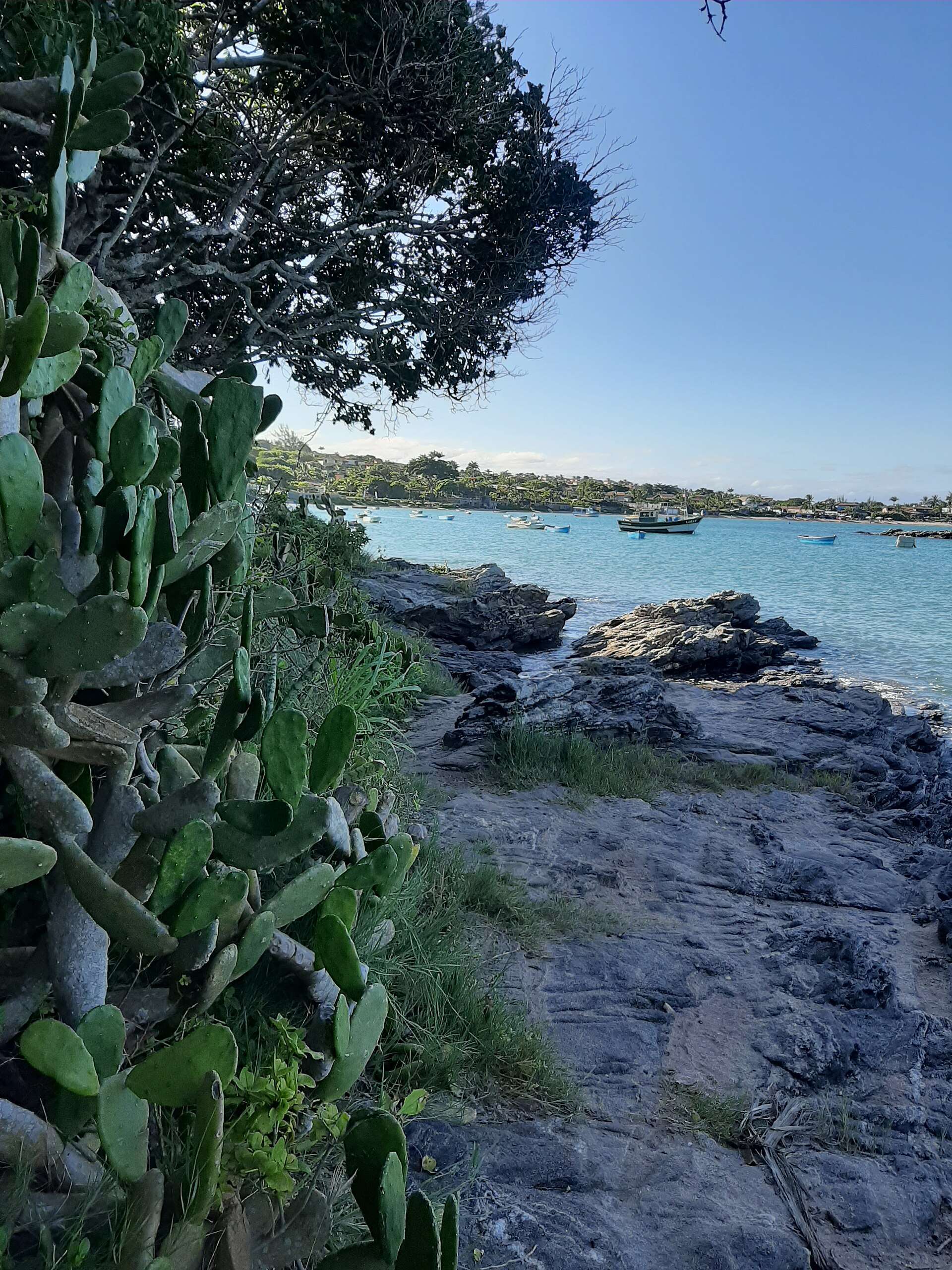
- The peninsula geometry is the product: some twenty beaches around a knuckle of land mean one side is always calm — the pick-by-wind rule per the alarm being local law: Geribá’s long surf arc, João Fernandes’ sheltered clarity, Azeda and Azedinha’s walk-in coves, Ferradura’s horseshoe for families.
- The schooner tours per the alarm run the lazy map: morning sails loop the peninsula’s coves with swim stops and caipirinhas — the one-ticket overview that converts beach indecision into an itinerary (town information at buzios.rj.gov.br).
- Rua das Pedras per the alarm is the evening and therefore the argument: the stone-paved lane of restaurants, bars, and galleries runs the peninsula’s night economy at full charm precisely when day-trippers face the dark highway — the overnight’s case stated in cobbles.
- The Armação core keeps the bones visible: the fishing-village church and working boats behind the boutiques, buggy rentals as the local transport idiom, and the pousada economy that per the alarm the peninsula was actually built for.

Getting there
The honest-long structure per the alarm: out by seven over the bridge, the lakes highway running you into Armação by mid-morning, and the return decision made before you leave — the disciplined late-afternoon departure, or the pousada booking that converts the trip into what Búzios actually sells. Buses run the same math with terminal transfers; buggies and taxis handle the peninsula’s short hops. The wind check at arrival per the alarm sorts the beach list in one glance — locals just look at the flags.
The day
Armação opens it: the orla’s curve, the Bardot bench photograph, the fishermen’s statue and the working boats that outrank it. The beach decision executes per the wind rule: the schooner’s loop for the overview version — coves, swim stops, the peninsula read from the water — or the direct commitment: Geribá’s surf and beach-bar economy, João Fernandes’ calm for snorkeling and long lunches, or the Azeda-Azedinha walk from Ossos over the headland to the coves that need no more infrastructure than they have. Lunch runs beach-service moqueca or the town’s Mediterranean-Brazilian register. The late afternoon is the alarm’s fork made flesh: the disciplined drive west into the sunset, or the pousada check-in, the shower, and Rua das Pedras at lamp-light — dinner, gallery windows, live music leaking from doorways — with the highway problem dissolved into tomorrow.
When to go
April through October runs the drier, clearer window with the peninsula at civilized density — the connoisseur season. December through Carnival is high season proper: Argentine and Brazilian holiday crowds, full pousadas, doubled traffic per the alarm’s Friday clause extended to whole weekends, and the town at maximum voltage. Water stays swimmable year-round; the wind rule applies daily in every month. Midweek visits halve everything difficult, which for a three-hour approach is the difference between a day trip and an endurance event.
Frequently Asked Questions
What exactly did Bardot do for Búzios?
Stayed two months in 1964, was photographed constantly, and made a barely-reachable fishing village internationally famous — the town dates its transformation to her visit and thanks her in bronze on the orla. The statue’s polished knees per every visitor’s photograph are the monument’s own wear pattern. The fishermen’s statue nearby is the town remembering what it was.
How does the pick-by-wind rule work?
The peninsula bends through enough compass that wind hitting one shore leaves the opposite one glassy — locals check the day’s direction and choose accordingly, and visitors copy them: windy at Geribá usually means calm at João Fernandes and the Ossos-side coves, and vice versa. The schooner skippers run the same logic from the water, which is half their product.
Is the schooner tour worth it?
As the overview per the alarm’s lazy-map clause, genuinely: two-to-three hours looping the coves with swim stops, cheap relative to the indecision it cures, and the only way a day-tripper samples the peninsula’s geometry without a buggy relay. Committed beach-dwellers skip it and spend the hours on their chosen sand instead — both are correct.
Can I do Búzios by bus?
Yes — frequent direct coaches run Rio’s terminal to Búzios in roughly the driving time, and the town end is walkable-plus-taxis. The bus removes the Friday-traffic variable from your hands without removing it from the road. Day-trippers check the last comfortable return departure at arrival per this network’s standing timetable habit; overnighters per the alarm just don’t.
Búzios or Petrópolis from Rio?
Both documented on this network: Petrópolis for the imperial mountain city — palace, felt slippers, cooler air — at half the distance; Búzios for the peninsula at honest-long price. Mountains versus beaches, emperor versus Bardot — and the season decides: Rio’s summer argues altitude, Rio’s winter argues the calmer, clearer coast.